

Responsible AI Innovation
I think about responsible innovation in fairly practical terms. Organizations need room to experiment with AI and new technology, but they also need to understand what they are introducing, where the risks are and who is responsible for the decisions being made.
I’ve spent much of my career introducing new technology into large organizations. Moving quickly matters, but so does understanding what changes when that technology becomes part of the way people actually work.
With AI, that includes how decisions are made, what needs oversight, where accountability sits and how organizations respond when the technology or its use changes.
For AI, my work involves helping organizations balance experimentation with appropriate governance, clear ownership and an understanding of the risks involved.
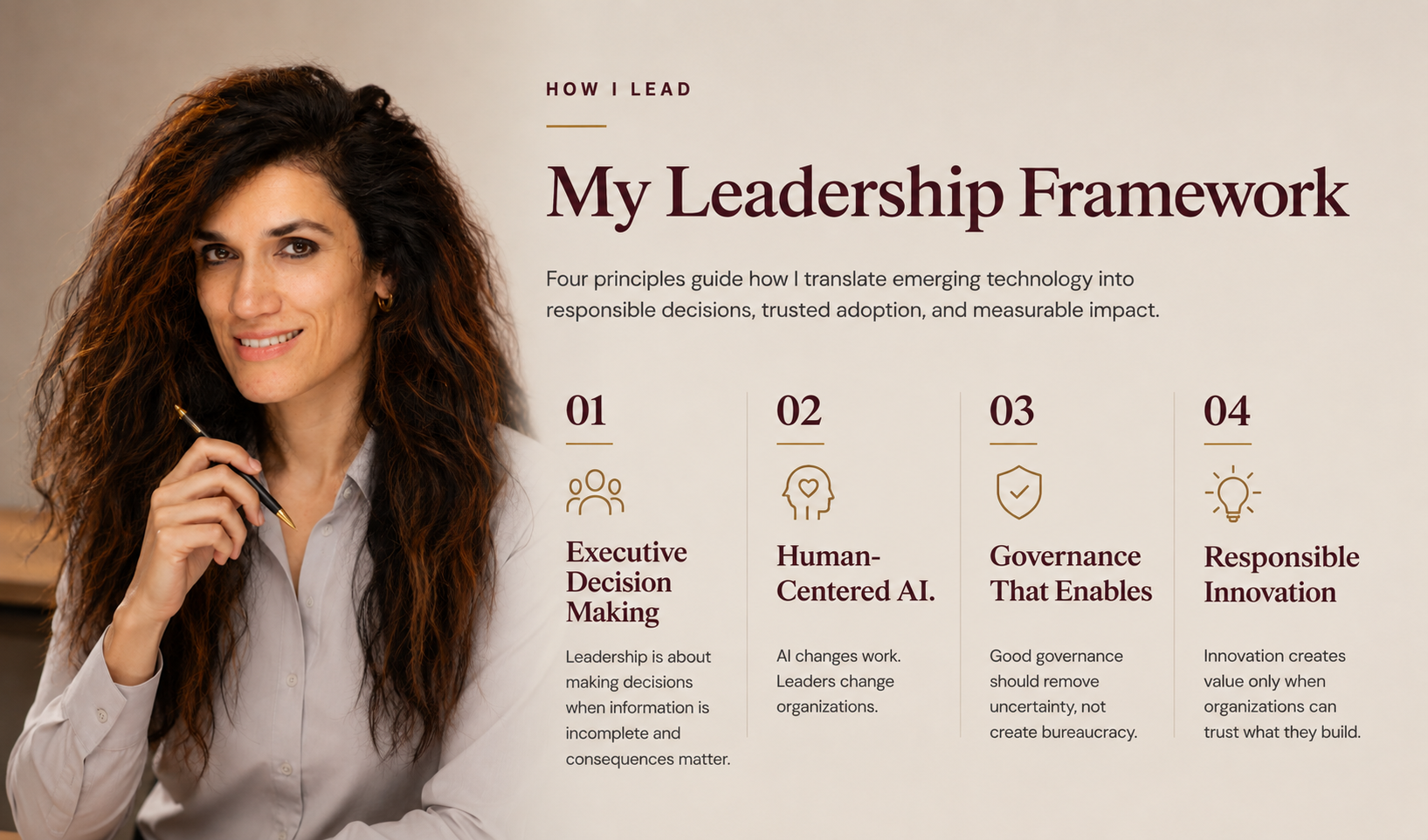
HOW I LEAD
MY LEADERSHIP FRAMEWORK

Four principles guide how I translate emerging technology into responsible decisions, trusted adoption, and measurable impact.
01
Executive Decision Making
Leadership is about making decisions when information is incomplete and consequences matter.
02
Human-Centered AI.
AI changes work.
Leaders change organizations.
03
Governance That Enables
Good governance should remove uncertainty, not create bureaucracy.
04
Responsible Innovation
Innovation creates value only when organizations can trust what they build.


Featured Articles
A selection of recent writing exploring practical leadership challenges in enterprise AI.